
Theory
The three steps in full, with the questions people actually ask at each one and what makes them stop.
The method
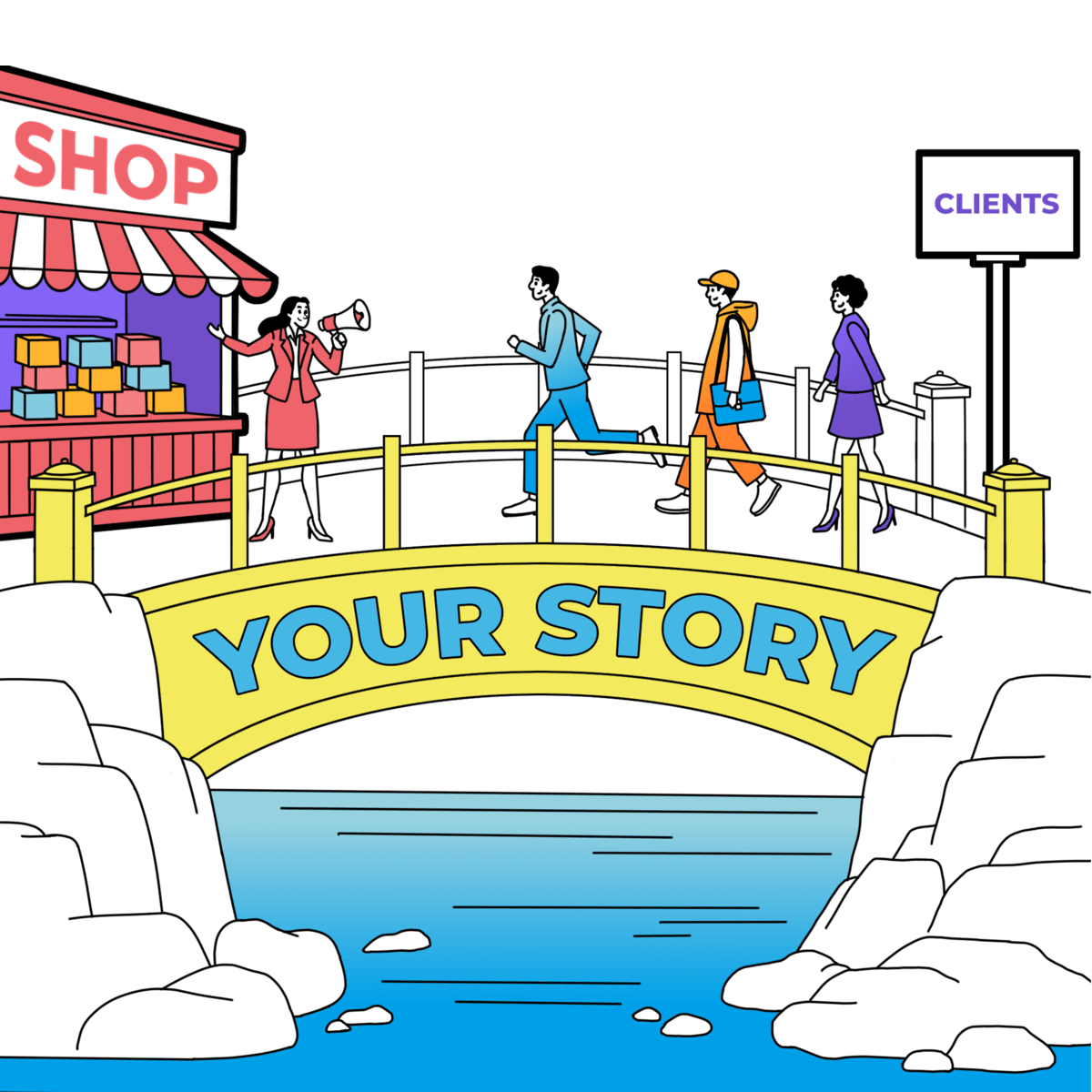
It is a way of building a company's story from the customer's side rather than its own. Not better words for the story you have — the story rebuilt from where the person you want is standing, in the order they need it.

The premise
They ran three checks instead, in a fixed order, mostly without noticing they were doing it. Get the first one wrong and they never reach the second. Most companies answer the third question first, then wonder where everybody went.
01
Is this for someone like me?
Before anyone evaluates what you sell, they decide whether you are talking to them at all. Fail here and nothing you say next gets read.
02
Do I understand it, and what do I compare it to?
Only now do they look at the offer — and they look at it beside every alternative they can think of, including doing nothing. The commonest red flag is not disagreement. It is not understanding fast enough.
03
What will my life be like after saying yes?
They picture the future, including the awkward parts: the migration, the meeting where they explain the decision, the year afterwards. If they cannot picture it, they do not move.
Only after all three does anyone do anything: start the trial, ask for a quote, make the reservation. The three steps in full →
What the work is
Storybuilding is not a copywriting exercise and it is not a brand book. It is a structured sequence your client-facing team works through together: who your customers really are and what they are trying to do, what your company actually is underneath what it says, then the story itself — assembled in the order a customer needs it, and tested against real ones before it goes anywhere near a website.
The reason the team is in the room is not consultation. It is ownership. A story handed to people gets quoted. A story people built gets used.

Go deeper
The three steps in full, with the questions people actually ask at each one and what makes them stop.
The four canvases, in order, and what a team actually does in the room to fill them in.
Six companies, what their story said before and after, and what changed as a result.
The whole method, 26 chapters, with the canvases and the worked examples. You can run it yourself.
Start with yours
The Current Standpoint Scan reads your story the way a customer meets it today, from what is already public. It is free, it takes a minute or two, and it will tell you whether any of this applies to you.
Tell me about your pivotal moment. No pitch. No obligation.