Founders
You can explain the product perfectly and still watch people not get it. The book is the sequence that closes that gap.

The Book
* Customer, User, Investor, Donor, Partner, Supplier, Boss
What happens in a person’s mind when they encounter a brand? Three steps, always in the same order. This is the whole method — how to see them, and how to build a story that survives all three.
Options to buy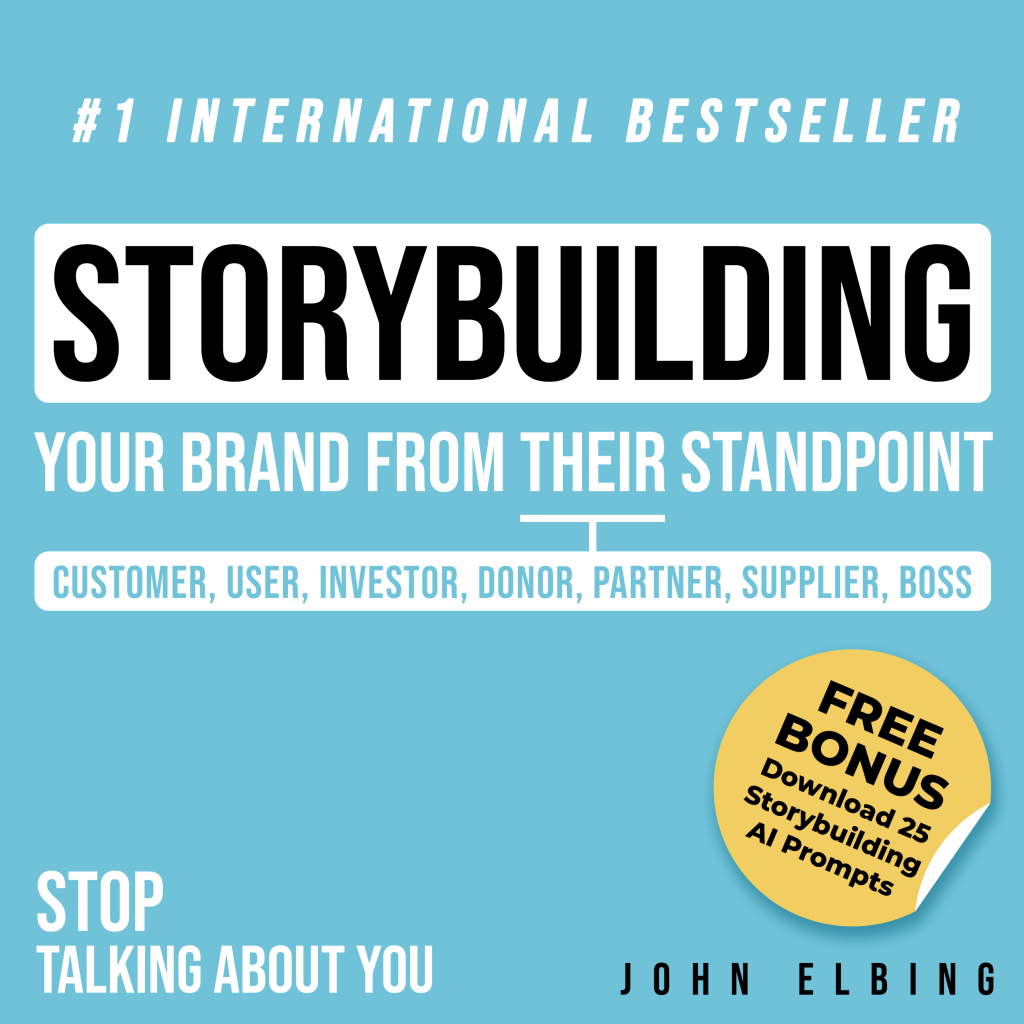
The question
Because they were never listening to your explanation. They were running three checks, in a fixed order, mostly without noticing: is this for someone like me? do I understand what they are and how they compare? and can I picture my life after saying yes? Fail the first and they never continue. Most brands concentrate on the second check and wonder why nobody stayed.
Storybuilding is what you do about that. Not better words for the story you already have — the story rebuilt from where your customer is standing, in the order they actually need it.
Who it is for
You can explain the product perfectly and still watch people not get it. The book is the sequence that closes that gap.
You inherited three versions of the story and a brand book nobody opens. This is how you get one version your colleagues will actually use.
The full method, canvases included, so you can run it with your own clients rather than take my word for any of it.
What is inside
The full contents, exactly as they appear in the book. Page numbers are the book’s own.
Part 1 p. 1
Why a story is a realignment tool and not a marketing exercise.
It sneaks in a brand realignment without triggering corporate resistance. That’s why I call it the Trojan Horse of brand strategy.
Storybuilding, p. 10Part 2 p. 25
The three steps every customer goes through, in order, whether you planned them or not.
Imagine your brand is a party. If people don’t instantly get who it’s for, what the vibe is, and whether they’ll enjoy themselves, they’re not stepping inside.
Storybuilding, p. 43Part 3 p. 69
Seeing the world through your customer’s eyes, then turning the same lens on yourself.
It’s like a dentist trying to understand your workout routine—interesting, perhaps, but not relevant to your cavity.
Storybuilding, p. 81Part 4 p. 147
Building the story itself: the structure, the sequence, and the test of whether it is the right one.
This is a framework, not a religious doctrine.
Storybuilding, p. 172Part 5 p. 209
The same story, worked through six different kinds of company — including a case study you can follow end to end.
But here’s the secret: just because B2B is all about logic, data, and ROI doesn’t mean emotion takes a backseat. Stories still matter—sometimes even more. They just need a suit and tie.
Storybuilding, p. 245Part 6 p. 283
What you have learned, and where the book came from.
From the book
Not a summary of the method — the actual pages, so you can hear how it is written before you decide whether to spend an evening with it.
Page 3
The first page of chapter one, in full.
Picture yourself at a dinner party. One guest won’t stop talking about themselves—their awards, their genius ideas, their latest life-changing vacation (that you definitely did not ask about). Another actually asks about you—what you do, what you care about, maybe even laughs at your jokes. Who would you rather be stuck next to when dessert takes forever? No contest. We connect with people who make us feel seen, heard and understood.
Storybuilding is about making your brand that good conversationalist—the one that listens, understands, and makes people feel seen. It’s not about shouting your message into the void; it’s about crafting a story that fits into your audience’s world, their challenges, and what actually matters to them. Whether you’re talking to customers, investors, or that donor who still isn’t sure about you, the secret isn’t what you want to say—it’s what they need to hear.
It’s the art of positioning your brand from their standpoint.
Page 62
From chapter 7, Self-Centered Brands — one customer, all three steps, in order.
Imagine a homeowner, Maria, looking for a gardening service to maintain her backyard. She searches online and comes across “GreenPro Landscaping,” a company whose website prominently displays awards, certifications, and technical jargon about soil types and advanced irrigation techniques.
Maria’s immediate reaction is: “Is this for me?”
Unfortunately, GreenPro Landscaping’s homepage fails to answer that question. Instead of lush garden photos or happy homeowners, it looks more like a LinkedIn profile for a very proud agronomist. Maria quickly feels overwhelmed and unsure if they cater to residential clients like her or focus on large commercial projects. She bounces faster than a squirrel spotting a bird feeder.
Maria gives the site a second chance, and is told about nitrogen absorption.
Ultimately, Maria hires a competitor whose website simply says: “We create beautiful gardens for busy homeowners. Leave the work to us and enjoy your outdoor space.”
Green thumbs don’t grow on self-centered soil.
Page 193
The shortest version of your story — the one for when someone asks what you do.
Which is better?
Or
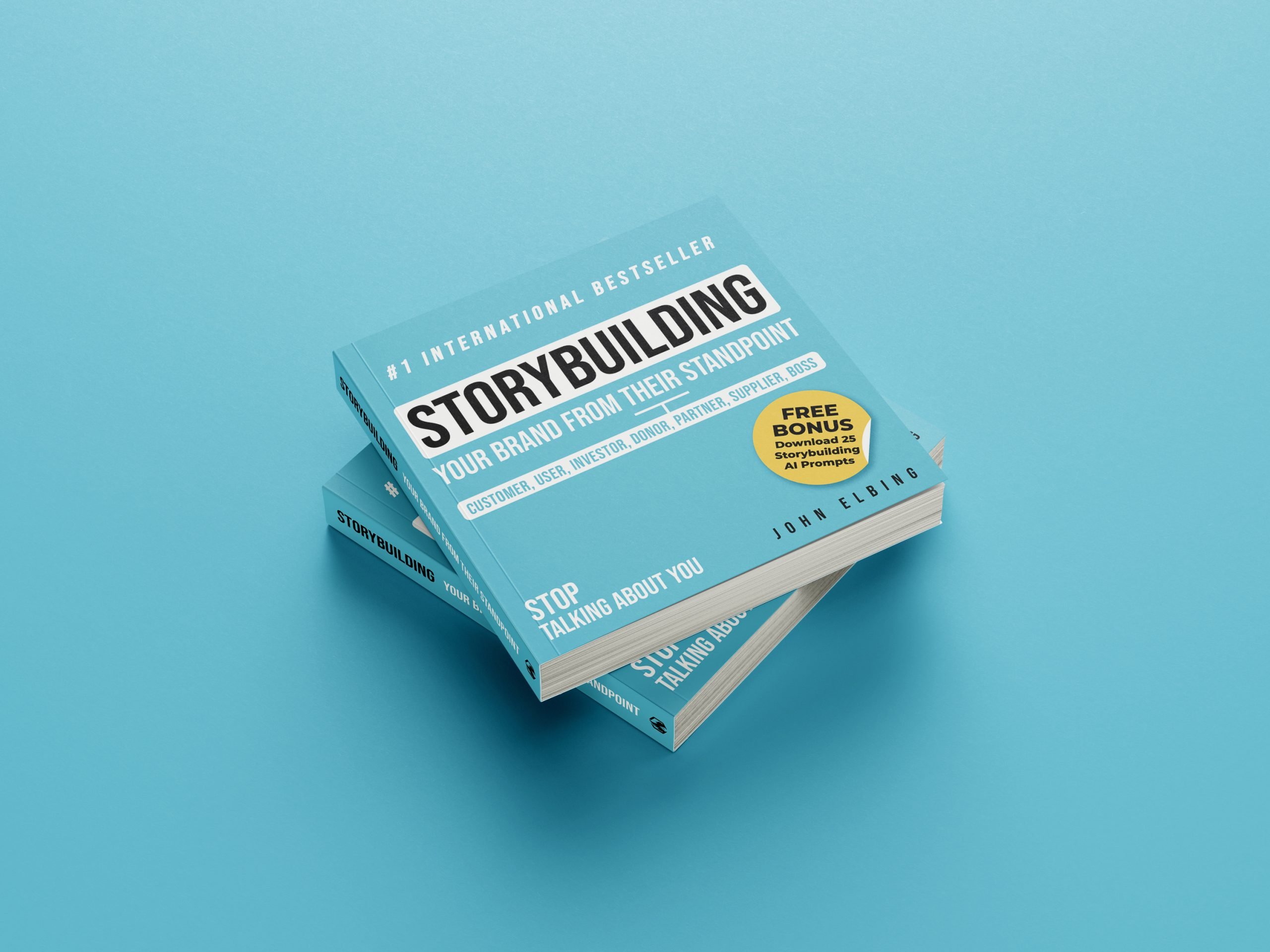
Big and square

Colorful

Practical — you work in it, not just read it

Worked examples: B2C, B2B, marketplace, non-profit, investor, internal pitch
Beyond the pages
Every copy comes with the working material, because a method you only read is a method you do not use. None of it is an upsell — it is included, and it is the reason the book calls itself interactive in chapter 3.
The longer worked examples that would not fit between the covers.
The canvases explained by someone filling them in, which is a different thing from reading about them.
Each exercise as a prompt you can point at your own company, so the first pass takes an evening rather than a quarter.
Where people doing this on their own compare what came out. Membership comes with the book.
Order
#1 International Bestseller
Order my book:
If you use a different Amazon country site, search for “Storybuilding Elbing”.
Amazon doesn’t sell ebooks in their App. You must go to a browser.
Tell me about your pivotal moment. No pitch. No obligation.