
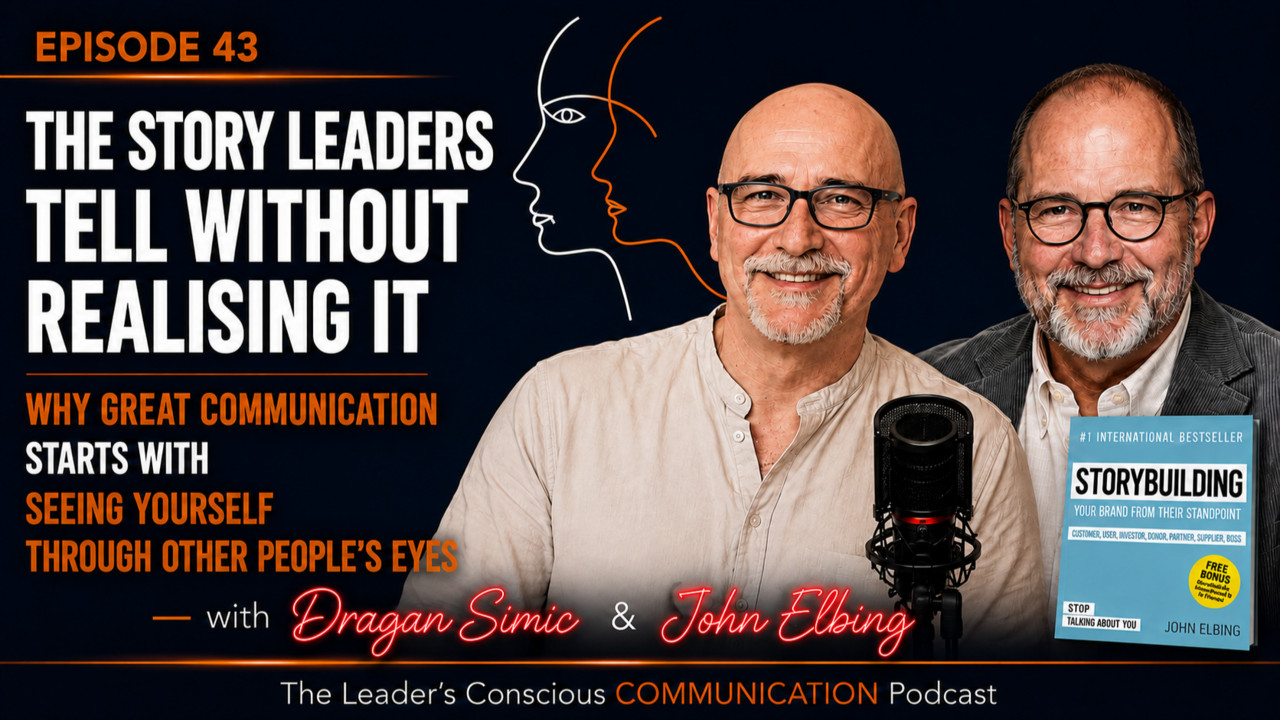
Playing loads the player from a third party, which may set cookies.
The technically best handyman in your town is not the one you call. You call the one who promises to turn up when he said he would.
That promise says nothing about his skill. It is proof that someone has thought about your morning — and a wasted morning is what has actually cost you before, not a badly fitted shelf. I kept coming back to that advert with Dragan Simic, because it holds the whole method in about nine words.
What we covered
-
Choosing the story before polishing delivery
-
Why humour without alignment backfires
-
Building the story with sales and marketing together
-
Psychological safety as a productivity question
-
Flipping the script towards employees
-
Where storytelling stops working
Dragan’s show is about communication inside organisations, so we spent longer than I usually do on silence. When nobody objects to a change, that can mean the story is good, or it can mean people do not feel safe enough to say otherwise. From the front of the room those two look identical. It is the strongest argument I know for building the story with people instead of announcing it to them.
One limit is worth saying out loud, because I do not think storytelling is a cure for much. It does not fix a company that is behaving badly; it makes one more persuasive. Good communication can cover poor conduct for a while, and clumsy communication can make decent conduct look worse than it is. The story has to be true before it is worth telling well.
The test I would give any business is its first screen. Not whether the offer is clear, but whether the customer recognises themselves. “We work with independent consultancies” earns more attention in five words than a page of capability ever will, because a reader who sees themselves keeps reading. One who does not has already gone.